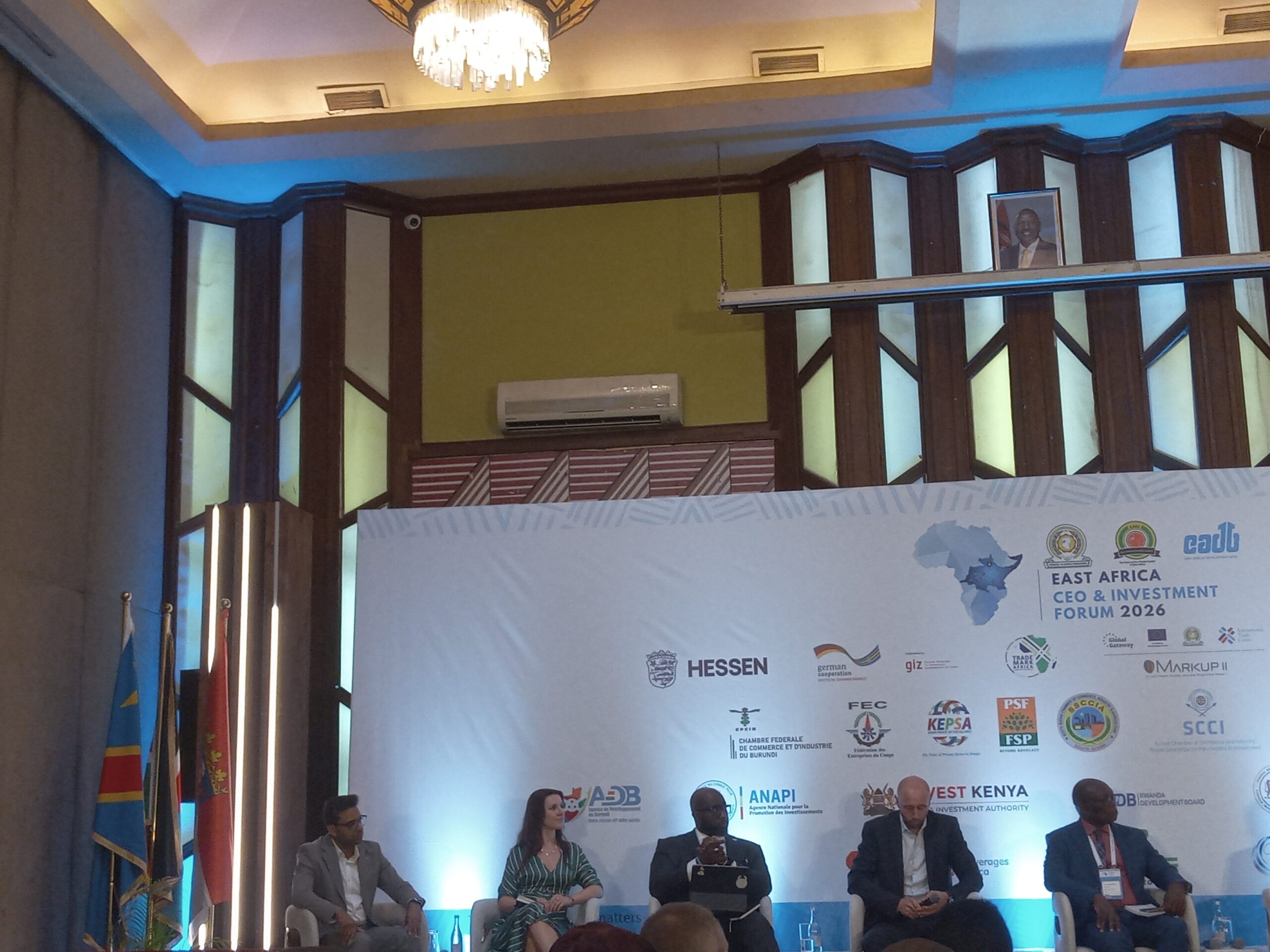
Artificial intelligence took centre stage during the ongoing East Africa CEO & Investment Forum 2026, where Jumia CEO Vinod Goel highlighted the growing role of technology in transforming the region’s digital economy.
Speaking during a session focusing on digital economy, telecommunications and financial technology, Goel demonstrated how artificial intelligence is increasingly becoming part of everyday business operations and consumer services.
He pointed to the rapidly expanding number of ways in which AI can be applied, highlighting more than 200 potential use cases across different sectors. The examples showed that AI is no longer limited to futuristic applications but is already being used to solve practical business and consumer challenges.
Among the areas highlighted was data security, where AI can help organizations identify unusual activity, detect potential threats and strengthen the protection of sensitive information. AI can also support businesses in analysing large volumes of data and identifying patterns that may be difficult to detect manually.
The discussion also touched on the wider opportunities presented by AI in fintech, telecommunications and e-commerce. In financial services, AI can contribute to fraud detection, customer support, risk analysis and more personalized services. In telecommunications, the technology can assist with network management, customer experience and data analysis.
For businesses operating in Africa’s rapidly changing digital marketplace, the message was clear: the adoption of AI is becoming an important part of the continent’s digital transformation.
Goel’s presentation placed particular emphasis on the need for businesses to understand not only what AI can do, but also how it can be deployed responsibly, particularly when dealing with customer information and data security.
As East Africa continues to expand its digital infrastructure and fintech ecosystem, discussions such as those at the CEO & Investment Forum are increasingly focused on how emerging technologies can translate into practical economic opportunities.
The growing number of AI applications presents both opportunities and challenges. Businesses will need to invest in skills, digital infrastructure, cybersecurity and responsible data management while ensuring that technological innovation creates meaningful value for consumers and the wider economy.
The forum therefore provided a timely platform for business leaders and investors to examine how AI, telecommunications, fintech and the broader digital economy could shape East Africa’s next phase of economic transformation.
By Fred Azelwa.