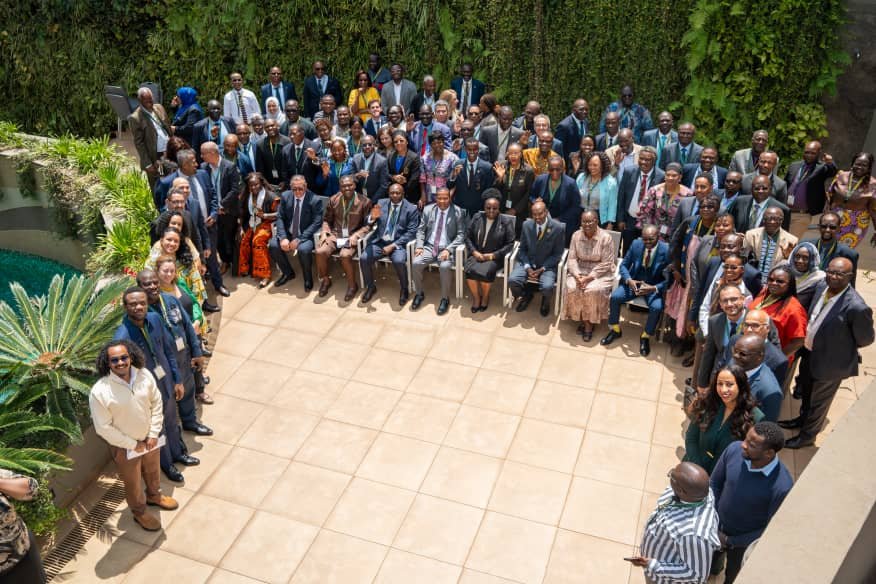
NAIROBI, Kenya —African governments, employers and workers’ representatives are meeting in Nairobi to strengthen a common African approach to labour migration and prepare for the second AU–GCC+ Labour Migration Dialogue, scheduled to take place in Dar es Salaam, Tanzania, on 5–6 October 2026.
The Tripartite Meeting, convened by the African Union Commission (AUC) with the support of the International Labour Organization (ILO), is bringing together representatives from 28 African Union Member States, Regional Economic Communities, the AUC, ILO, ITUC-Africa and Business Africa.
Taking place on 22–23 September, the meeting is expected to consolidate shared African priorities on labour mobility between Africa and the Gulf Cooperation Council (GCC) States, Jordan and Lebanon.
Labour migration remains an important contributor to development across Africa, supporting livelihoods, skills development, remittances and regional integration. While most African migration takes place within the continent, migration to Gulf and other Arab States has increased over the past decade.
Participants are also examining persistent challenges faced by African migrant workers, including unfair recruitment practices, contract substitution, wage-related violations, unsafe working conditions and limited access to social protection and effective grievance mechanisms. Women migrant workers, particularly those employed in domestic work, can face additional vulnerabilities.
The 2026 Doha Dialogue will be held under the theme “From Commitment to Action: Advancing Fair and Sustainable Labour Mobility between Africa and the GCC+.” Discussions will focus on skills and labour-market pathways; decent work and protection; and social protection, health coverage and portability of benefits. Bilateral labour migration agreements will be considered as a cross-cutting issue.
Established in 2024 as a voluntary, non-binding and state-led consultative process, the Doha Dialogue provides a platform for African and Arab countries to strengthen cooperation on safe, orderly and regular labour mobility, while promoting decent work and the protection of migrant workers.
The Nairobi meeting provides African tripartite constituents with an opportunity to assess progress since the first Doha Dialogue, examine emerging labour migration trends and agree on priorities for the upcoming discussions in Dar es Salaam.
A key expected outcome is a Common African Tripartite Statement setting out African priorities and recommendations for the 2026 Doha Dialogue.
The discussions also seek to strengthen social dialogue and tripartite cooperation while promoting a rights-based, gender-responsive and development-oriented approach to labour migration, in line with international labour standards and the ILO’s decent-work mandate.
The meeting is supported through various labour migration projects financed by development partners, including the European Union (EU), the UK Foreign, Commonwealth & Development Office (FCDO), the Swiss Agency for Development and Cooperation (SDC) and the Swedish International Development Cooperation Agency (Sida).
By Fred Azelwa.